Okay, here is a 2000-word article on Eco-friendly Luxury Furniture Brands 2025, written in English.
The Confluence of Conscience and Craft: Eco-Friendly Luxury Furniture Brands 2025
The opulent embrace of luxury and the conscientious whisper of sustainability once seemed diametrically opposed. Luxury, for decades, was often associated with exclusivity, extravagance, and sometimes, a disregard for environmental impact in the pursuit of rare materials and intricate craftsmanship. Sustainability, on the other hand, frequently conjured images of minimalism, utility, and perhaps, a perceived compromise on aesthetic grandeur. However, as we stand on the cusp of 2025, this antiquated dichotomy has not merely dissolved; it has given way to a powerful and compelling synergy. The discerning luxury consumer of today and tomorrow is not only seeking unparalleled quality and timeless design but also demanding transparency, ethical provenance, and a minimal ecological footprint.
By 2025, the landscape of high-end furniture is profoundly transformed. Leading luxury brands are no longer just adding sustainable practices; they are embedding them into the very core of their identity, from conceptual design to material sourcing, production processes, and end-of-life considerations. This evolution is not a passing trend but a fundamental redefinition of luxury itself – one where true value is measured not just by price or prestige, but by integrity, responsibility, and enduring legacy.
The Shifting Paradigm: Luxury Redefined for 2025
The modern luxury consumer is a sophisticated, globally aware individual. They are often well-informed about environmental issues, social injustices, and the broader impact of their purchasing decisions. For this demographic, conspicuous consumption is out; conscious consumption is in. They are willing to invest in pieces that tell a story – a story of ethical craftsmanship, sustainable innovation, and enduring beauty. This shift is driven by several factors:
- Increased Awareness: Global climate discussions, documentaries, and readily available information have heightened consumer understanding of environmental degradation and resource depletion.
- Ethical Imperative: There’s a growing moral compass guiding purchasing choices, favoring brands that demonstrate social responsibility and fair labor practices.
- Investment in Longevity: Fast furniture is out. Luxury consumers seek heirloom pieces designed to last generations, reducing waste and offering true value over time.
- Authenticity and Transparency: Brands that openly share their supply chains, material sourcing, and production methods build trust and loyalty. Greenwashing is easily detectable and severely penalizes reputation.
- Wellness and Health: A greater understanding of indoor air quality and the impact of chemicals has led to a demand for non-toxic materials and finishes.
In this redefined luxury paradigm, sustainability is no longer a niche marketing ploy but a fundamental pillar of excellence. It signifies superior quality, innovative thinking, and a profound respect for both people and planet.
Pillars of Eco-Friendly Luxury Furniture in 2025
The most forward-thinking luxury furniture brands by 2025 are meticulously addressing sustainability across every facet of their operations:
1. Sustainable and Innovative Materials
The foundation of eco-luxury furniture lies in its materials. Brands are moving far beyond simply "natural" to embrace a truly holistic approach:
- Certified Timber: FSC (Forest Stewardship Council) certified wood is the baseline. Beyond this, brands are prioritizing reclaimed, salvaged, and antique woods, giving new life to materials with rich histories. This includes reclaimed oak from old barns, teak from retired ships, or even salvaged timber from deconstructed buildings.
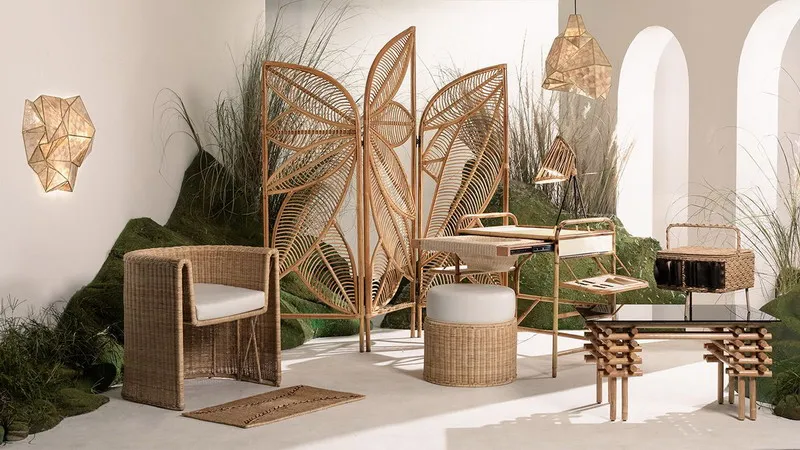
- Rapidly Renewable Resources: Bamboo, cork, and rattan, when responsibly harvested, offer durable and beautiful alternatives.
- Organic and Recycled Textiles: Upholstery is increasingly made from organic cotton, linen, hemp, Tencel (Lyocell), and innovative fabrics derived from recycled ocean plastic or post-consumer waste. Dyes are natural or low-impact.
- Recycled Metals: Steel, aluminum, and brass are sourced from recycled content, significantly reducing the energy and resource intensity of production.
- Biomaterials and Advanced Composites: This is a frontier of innovation. Expect to see furniture incorporating mycelium (mushroom-based materials), bioplastics derived from plant waste, algae-based pigments, and even experimental materials grown in labs that mimic natural properties.
- Natural Fillings: Down and feathers are replaced with natural latex, organic wool, coconut coir, or recycled foam, ensuring both comfort and breathability without harmful chemicals.
2. Ethical Production and Supply Chain Transparency
By 2025, a brand’s commitment to sustainability extends deep into its supply chain:
- Fair Labor Practices: Ensuring fair wages, safe working conditions, and ethical treatment for all artisans and workers involved in the production process, often verified by third-party certifications like Fair Trade.
- Local Sourcing and Craftsmanship: Prioritizing materials and craftsmanship from local or regional sources reduces transportation emissions and supports local economies and artisanal traditions. This also allows for greater oversight of working conditions and material quality.
- Reduced Waste and Circular Principles: Manufacturers are adopting lean production methods to minimize material waste. Offcuts are repurposed, recycled, or upcycled into smaller products. Many brands are designing for disassembly, allowing components to be easily repaired, replaced, or recycled at the end of the product’s life, contributing to a truly circular economy.
- Energy Efficiency: Production facilities are increasingly powered by renewable energy sources, and processes are optimized for minimal energy consumption.
3. Longevity, Durability, and Design for Disassembly
The ultimate sustainable product is one that never needs to be replaced. Luxury brands understand that durability is inherent to sustainability:
- Heirloom Quality: Furniture is built to last for generations, using robust joinery, high-quality hardware, and timeless designs that resist fleeting trends.
- Repairability: Components are designed to be easily repaired or replaced. Brands offer repair services or provide guidance and parts for clients to undertake repairs.
- Modular Design: Some pieces are designed to be reconfigured or expanded, adapting to changing living situations and extending their functional lifespan.
4. Non-Toxic Finishes and Adhesives
The unseen elements are just as crucial. By 2025, luxury furniture is free from harmful chemicals:
- Low-VOC and VOC-Free Finishes: Paints, varnishes, and sealants are water-based or natural oil/wax-based, eliminating volatile organic compounds that degrade indoor air quality and harm human health.
- Natural Adhesives: Glues and bonding agents are plant-based or non-toxic, avoiding formaldehyde and other hazardous chemicals.
Key Trends Shaping the Eco-Luxury Furniture Landscape in 2025
Beyond the core pillars, several macro trends are defining the eco-luxury furniture market:
- Hyper-Transparency & Digital Storytelling: Brands are leveraging digital platforms, QR codes, and even blockchain technology to provide granular detail about a product’s journey – from the forest or mine to the workshop and finally to the customer’s home. This includes information on material provenance, artisan profiles, carbon footprint data, and end-of-life instructions.
- Bespoke and Customization: The demand for unique, personalized pieces reduces overproduction and ensures that each item is a perfect fit for the client’s needs and aesthetic, enhancing its longevity and perceived value. This also allows for precise material usage.
- Biophilic Design Integration: Connecting interiors with nature is paramount. Eco-luxury furniture often incorporates natural forms, textures, and colors, fostering a sense of well-being and tranquility. This includes live-edge wood, woven natural fibers, and integrated plant elements.
- Smart Sustainability: Technology is used to enhance sustainability without compromising luxury. This could involve embedded sensors that monitor humidity to preserve wood integrity, or modular lighting systems with ultra-efficient LEDs designed for easy replacement.
- Certification and Validation: Third-party certifications like B Corp, Cradle-to-Cradle, LEED, and specific material certifications (e.g., GOTS for organic textiles) are becoming essential benchmarks, offering verifiable proof of a brand’s sustainable claims.
Leading the Way: Exemplary Eco-Friendly Luxury Furniture Brands in 2025
While specific brand names might evolve, the archetypes of leading eco-luxury furniture brands in 2025 embody these principles with unparalleled dedication. Let’s envision a few illustrative examples:
1. "The Alchemist’s Atelier"
Ethos: A master of transformation, turning forgotten materials into timeless treasures.
Focus: Reclaimed and upcycled materials, artisanal craftsmanship, bespoke pieces.
The Alchemist’s Atelier sources rare, reclaimed timber from deconstructed historical buildings – ancient barn wood, salvaged industrial beams, and shipwrecked logs – each piece carrying a unique history. Their artisans meticulously restore and transform these materials, often preserving original markings and imperfections that tell a story. Metal elements are exclusively sourced from upcycled industrial steel and salvaged bronze, expertly forged and finished.
Their approach is entirely bespoke. Clients collaborate with designers to create unique pieces, ensuring no two are identical. Upholstery is made from hand-woven organic hemp or recycled cashmere, dyed with natural plant extracts. The finishing process uses only natural oils and waxes, enhancing the wood’s inherent beauty while being entirely non-toxic. The Alchemist’s Atelier provides a "material passport" with each piece, detailing the exact origin of every component, often with historical anecdotes and artisan profiles, verifiable via a blockchain-secured QR code. They also offer lifetime repair and restoration services, emphasizing their commitment to circularity and longevity.
2. "Veridian Living"
Ethos: Pioneering the future of sustainable luxury through innovation and cutting-edge design.
Focus: Innovative biomaterials, advanced sustainable manufacturing, modularity.
Veridian Living represents the technological frontier of eco-luxury. They invest heavily in R&D to develop proprietary biomaterials, such as panels made from compressed agricultural waste or elegant composites derived from algae and fungi. Their signature pieces often feature structures crafted from recycled aerospace-grade aluminum, meticulously polished to a mirror finish, or lightweight, incredibly strong bioplastic components.
Their manufacturing process is a marvel of efficiency, utilizing AI-driven design optimization to minimize material waste, 3D printing for complex components with zero offcuts, and a fully renewable energy-powered facility. Veridian Living offers modular furniture systems that can be reconfigured or expanded as a client’s needs evolve, preventing obsolescence. Each piece is designed for ultimate disassembly, with clearly marked components for easy repair or recycling. Their digital platform allows clients to virtually customize designs, view the projected carbon footprint of their chosen piece, and even track its production journey in real-time.
3. "Terra Firma Designs"
Ethos: Grounded in tradition, community, and the inherent beauty of local resources.
Focus: Regional sourcing, artisanal techniques, community impact, holistic circularity.
Terra Firma Designs celebrates the beauty and integrity of materials sourced directly from the land around their workshops. They work exclusively with FSC-certified wood from sustainably managed forests within a 200-mile radius, often collaborating directly with foresters to select specific trees. Their craftsmen utilize traditional joinery techniques, minimizing the need for glues and fasteners.
Upholstery fabrics are hand-spun wool from local sheep, organic linen grown and woven regionally, or upcycled textiles from their own production waste, re-spun into new yarn. Dyes are derived from natural pigments found in the local environment. Terra Firma Designs is deeply embedded in its community, providing fair wages and training programs for local artisans, preserving traditional skills. They operate a comprehensive take-back program, offering credit for old pieces that they will refurbish, re-sell, or deconstruct for parts, closing the loop on their products. Their narrative emphasizes the "terroir" of their furniture, reflecting the unique characteristics of the land and hands that created it.
Challenges and Opportunities
While the shift towards eco-friendly luxury furniture is undeniable, the journey is not without its challenges:
- Cost: Sustainable materials and ethical production often incur higher initial costs, which must be absorbed or passed on to the consumer, though the long-term value proposition is compelling.
- Scaling Production: Sourcing sustainable materials in large quantities and maintaining consistent quality can be challenging for mass production.
- Consumer Education: While awareness is growing, some consumers still need to be educated on the true value and benefits of sustainable luxury.
- Greenwashing: The risk of brands making unsubstantiated environmental claims remains, necessitating robust certification and transparency.
- Supply Chain Complexity: Tracing and verifying the ethical and environmental credentials of every component in a global supply chain is an immense undertaking.
However, these challenges are dwarking the immense opportunities:
- Market Differentiation: Brands that genuinely commit to sustainability gain a significant competitive edge and attract a growing segment of discerning consumers.
- Innovation: The pursuit of sustainability drives innovation in material science, design, and manufacturing processes.
- Brand Loyalty: Authenticity and transparency foster deeper trust and loyalty with consumers.
- New Business Models: Opportunities for leasing, repair services, and re-commerce models emerge, creating new revenue streams and extending product lifecycles.
- Positive Impact: Ultimately, these brands contribute to a healthier planet and more equitable societies.
The Future Outlook Beyond 2025
Looking beyond 2025, the integration of sustainability into luxury furniture will only deepen. We can anticipate further advancements in bio-fabricated materials, self-healing finishes, and furniture that actively contributes to indoor air purification. The concept of "regenerative design," where products and systems not only minimize harm but actively restore and regenerate natural systems, will become the ultimate aspiration.
Luxury furniture will increasingly be seen not just as an object of desire, but as an artifact of conscious living – a testament to human ingenuity, ethical stewardship, and enduring beauty. The brands that thrive in this evolving landscape will be those that master the art of blending exquisite craftsmanship with unwavering environmental and social responsibility, proving that true luxury is, by its very nature, sustainable. The future of luxury is green, ethical, and profoundly beautiful.